
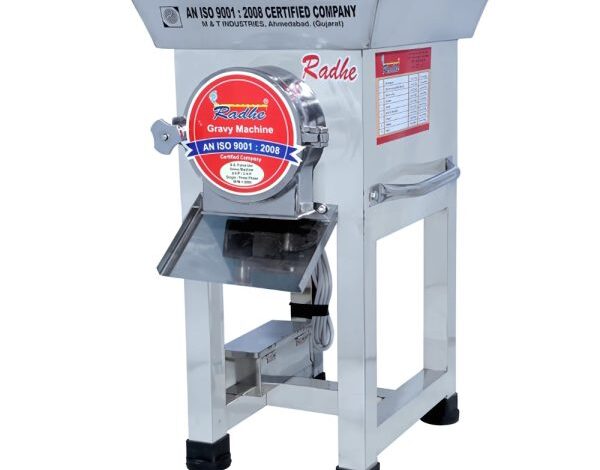
Restaurants, catering businesses and food manufacturers depend on consistent preparation when producing sauces, gravies and blended food bases. A Gravy Machine can help organize this stage by processing suitable ingredients into a smoother mixture with less manual effort. Radhe Food Processing Machinery serves food processing businesses seeking equipment that fits practical production requirements. Before selecting a model, buyers should consider batch size, ingredient texture, power supply, cleaning access and expected working hours. Matching these factors with the intended application helps create a reliable preparation area and supports consistent output across daily operations.
The Role of Mechanized Gravy Machine Preparation
Preparing gravy by hand can require repeated chopping, mixing, grinding and straining. A suitable Gravy Machine can bring selected preparation steps into one process, depending on its design and attachments. In busy kitchens, a well-configured Gravy Machine may also simplify repeated batch preparation.
Written batch settings help teams reproduce results across shifts and maintain consistent daily preparation standards. Different recipes need different textures. Some require a fine, uniform base, while others retain small pieces of vegetables or spices. Users should confirm whether the equipment supports the required consistency before placing an order.
Features Worth Reviewing Before Purchase
A machine’s design influences its suitability, service life and ease of operation. When assessing a Gravy Machine, examine the motor rating, vessel capacity, blade arrangement, body material and control system. A commercial Gravy Machine should also match the thickness of the mixtures being processed. Food-contact surfaces should suit the intended ingredients and allow thorough cleaning after use.
Ask the supplier for operating instructions and details about replacement parts so the equipment can be maintained correctly.
Applications in Commercial Food Businesses
Hotels, restaurants, caterers and institutional kitchens prepare gravies for different menus and service volumes. A Gravy Machine may assist with tomato bases, onion mixtures, curry pastes and other compatible preparations.
However, every ingredient behaves differently during processing. Hard vegetables, fibrous materials and ingredients with high moisture content may need specific preparation or batch limits. Follow the manufacturer’s guidance and test the intended recipe before introducing the equipment into routine production.
Capacity and Output Considerations
Choosing capacity requires more than looking at the largest available vessel. Estimate the quantity required per batch, the number of batches per shift and the time available for preparation. A correctly sized Gravy Machine can fit the workflow without occupying more space or drawing more power than necessary. Selecting a Gravy Machine around actual demand also helps avoid oversized batches.
Ask suppliers how performance changes with thick mixtures and different ingredient loads. Processing time, motor strength and blade design can affect results. If demand changes during festivals or peak service periods, discuss realistic operating cycles and suitable batch planning.
Hygiene, Safety and Daily Care
Food preparation equipment needs a clear cleaning routine. After each use, disconnect the power supply and follow the manufacturer’s instructions for removing residue from the vessel, blades and other accessible parts. Do not immerse electrical components unless the design specifically permits it.
Operators should inspect cables, switches, fasteners and moving parts at suitable intervals. Never reach into the vessel while the machine is connected to power. Proper training helps staff use a Gravy Machine safely and reduces avoidable damage caused by incorrect loading or operation. Consistent checks keep the Gravy Machine ready for scheduled work.
Selecting a Supplier and Installation Support
A dependable purchase involves more than comparing prices. Buyers should ask about machine specifications, installation needs, warranty terms, service availability and spare-part access. Radhe Food Processing Machinery offers food processing machinery solutions for businesses assessing equipment for their production needs.
When discussing a Gravy Machine, explain the recipes, daily quantity, required texture and available workspace. Clear information allows the supplier to recommend a configuration based on the actual application rather than a general capacity estimate. Confirm electrical requirements and cleaning procedures before installation.
Planning an Efficient Preparation Area
The location of equipment affects staff movement and hygiene. Place the machine near ingredient preparation and cooking areas while keeping enough space for loading, unloading and cleaning. Arrange raw materials and finished mixtures separately to reduce cross-contamination risks.
A Gravy Machine should also have a suitable power connection and a stable working surface. Plan the movement of containers so employees do not carry heavy vessels across busy walkways.
Coordinating Equipment Across a Processing Line
Larger food businesses may use separate equipment for washing, cutting, grinding, mixing, cooking and filling. A Gravy Machine can serve one stage within this arrangement when its capacity matches the machines before and after it.
Support for Complete Spice and Food Processing Setups
Businesses developing a broader production facility may need guidance on connected machinery, floor space and processing capacity. A Masala Plant Machine Manufacturer can help assess equipment combinations for spice preparation, grinding, mixing and related operations. Discuss the product range and expected output so each stage can be considered within the overall plant layout.
Conclusion
Consistent gravy preparation depends on suitable equipment, correct batch sizes and disciplined operating practices. A well-matched Gravy Machine can support commercial kitchens and food manufacturers that need repeatable preparation for compatible recipes. Compare capacity, construction, cleaning access, safety features and service support before making a purchase. Radhe Food Processing Machinery can discuss application requirements and available machinery configurations. With careful installation, staff training and regular maintenance, the equipment can become a useful part of an organized food preparation process.