

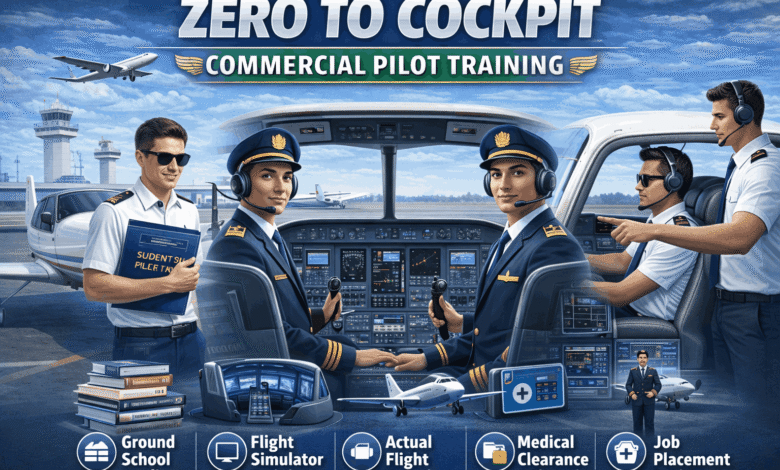
Aviation is a demanding profession that combines technical knowledge, practical skill, discipline, and sound judgment. Commercial Pilot Training gives aspiring pilots a structured route toward understanding aircraft operations and professional flying standards. Students study subjects such as navigation, meteorology, aviation regulations, aircraft systems, communication, and human factors while gaining practical exposure to cockpit procedures. Aviation_aasdc creates a focused learning environment where candidates can develop aviation knowledge alongside professional habits. With consistent study, supervised practice, and a responsible attitude, learners can prepare for the demands of commercial aviation and build a strong foundation for future opportunities in the flying profession.
The Learning Journey Starts With Fundamentals
Every pilot needs a clear understanding of aviation principles before progressing to advanced flight tasks. Commercial Pilot Training introduces learners to aircraft operations, aerodynamics, navigation basics, weather awareness, and regulatory responsibilities.
These fundamentals help students understand why pilots follow specific procedures. Learners can connect technical concepts with actual flight situations.
Commercial Pilot Training and Flight Practice
Practical flying turns classroom knowledge into usable cockpit skills. Commercial Pilot Training allows learners to work on aircraft handling, takeoffs, landings, circuit procedures, navigation exercises, and communication routines under appropriate supervision.
Progress depends on repetition and feedback. Students can improve by reviewing each session, identifying mistakes, and applying instructor guidance during later flights. This cycle builds consistency.
Navigation Shapes Pilot Awareness
Navigation is central to safe flight planning. Commercial Pilot Training develops skills related to charts, routes, headings, distances, timing, and positional awareness.
Weather, terrain, airspace, and aircraft performance also influence route planning. Combining these factors gives students a broader view of flight preparation and in-flight decision-making.
DGCA Entrance Exam
The DGCA Entrance Exam may apply to particular aviation admission pathways, depending on the selected institution and program. Candidates should verify current eligibility rules, examination details, application procedures, and document requirements through relevant official sources. Preparation can begin with a clear review of the applicable syllabus and a realistic study schedule. Students should also understand the admission conditions of their chosen training provider because requirements may differ. Early organization can help candidates manage preparation more effectively and approach the selection process with greater confidence.
Weather Knowledge Supports Better Decisions
Weather can change flight conditions quickly, so pilots must understand forecasts, reports, visibility, wind, clouds, and other atmospheric factors. Commercial Pilot Training gives students a foundation for interpreting weather information.
This knowledge supports planning before departure and awareness during flight. Checking changing conditions also encourages informed decisions.
Aircraft Systems and Technical Understanding
Pilots need to know how important aircraft systems function. Commercial Pilot Training can introduce learners to engines, instruments, electrical components, fuel systems, flight controls, and other technical areas.
Technical understanding gives context to cockpit checks and operating procedures. It can also help students recognize unusual indications and follow established guidance.
Communication Has a Professional Role
Aviation depends on clear communication between pilots, air traffic services, crew members, and ground personnel. Commercial Pilot Training can develop radio communication, standard phraseology, listening skills, and concise professional interaction.
Realistic practice can make important exchanges more natural while encouraging precision.
Safety Becomes a Daily Habit
Safety is built through preparation rather than emergency response alone. Commercial Pilot Training can reinforce checklists, standard operating procedures, risk awareness, situational awareness, and responsible decision-making.
Careful preparation, proper communication, and respect for procedures create habits that remain valuable throughout a pilot’s career.
Aviation_aasdc and Practical Career Preparation
Aviation_aasdc can support learners by providing an environment centered on aviation education and practical development. Commercial Pilot Training becomes more valuable when students participate actively, revise theoretical subjects, and take every practical session seriously.
Personal discipline also matters. Reviewing feedback and tracking areas for improvement can help learners use training time effectively.
Students should recognize that pilot training requires patience. Different skills develop at different speeds, and some exercises may require additional practice. A consistent routine can help candidates respond constructively to feedback. Careful preparation before each lesson also allows more time for meaningful practice. This approach can reduce avoidable mistakes and encourage learners to take responsibility for their progress throughout training.
Fitness and Professional Discipline
Flying requires alertness, concentration, and appropriate physical readiness. Commercial Pilot Training should therefore be approached alongside applicable medical and fitness requirements.
Healthy routines and adequate rest can support concentration during classroom learning and flight activities.
Choosing a Suitable Training Environment
The quality of a training environment can influence the overall learning experience. When comparing Commercial Pilot Training programs, students should examine instructor experience, aircraft availability, facilities, practical exposure, scheduling, curriculum coverage, and support services.
Understanding the complete training pathway can help candidates compare programs according to individual goals.
Preparing for a Professional Flying Career
Commercial Pilot Training provides an important foundation, but professional development continues after initial qualification. Pilots must keep learning as aircraft technology, operational practices, regulations, and industry expectations evolve.
Students can strengthen preparation by following aviation developments, improving communication, and learning from every training session.
Conclusion
Aviation requires technical understanding, practical control, careful communication, and disciplined judgment. Commercial Pilot Training brings these areas together through academic study, flight practice, safety awareness, and professional preparation. Aviation_aasdc can provide aspiring pilots with a focused environment for developing these foundations. Before selecting a program, candidates should compare training facilities, instructors, aircraft access, curriculum, practical exposure, and support. With consistent effort, responsible habits, and a willingness to keep improving, Commercial Pilot Training can help learners move from initial aviation interest toward stronger preparation for professional flying opportunities.