
Ask an elderly relative about their most cherished trip, and you will be surprised by how often you hear about Char Dham. Four temples, scattered all around the country, and the traditional belief that seeing them all will help gain spiritual blessings. In this guide, you will learn about the 4 Dham Names in India and find out more about the locations and uniqueness of each of these shrines, as well as the uninteresting, yet important information: seasons, routes, and planning advice.
What Are the 4 Dham in India?
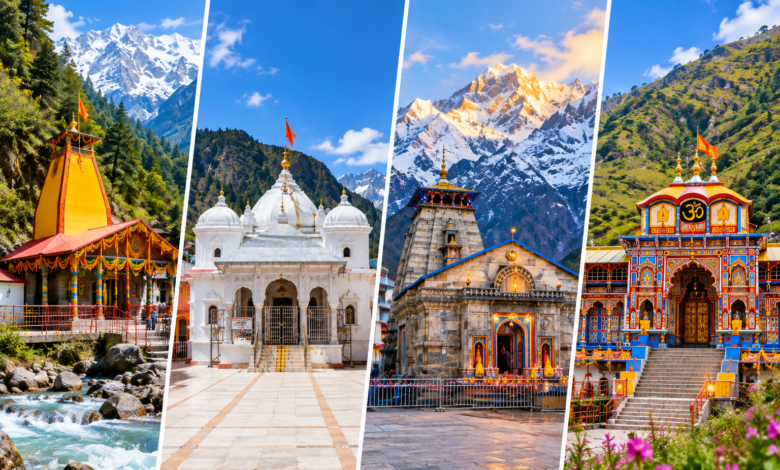
Char Dham means “four abodes.” As per the tradition, Adi Shankara chose these four locations for the purpose of uniting India spiritually. But what are the 4 Dhams of India? Badrinath (North), Dwarka (West), Puri (East), and Rameshwar (South). Three of them are connected to Vishnu or Krishna, whereas the fourth is connected to Shiva. You might easily get confused between these Dham and Chota Char Dham of Uttarakhand, which are completely different pilgrimages.
4 Dham Names in India and Their Locations
Quick reference first. This is the 4 Dham Names in India list in one glance:
| Dham | Location | State | Famous For |
| Badrinath | Badrinath | Uttarakhand | Badrinath Temple |
| Dwarka | Dwarka | Gujarat | Dwarkadhish Temple |
| Puri | Puri | Odisha | Jagannath Temple |
| Rameswaram | Rameswaram | Tamil Nadu | Ramanathaswamy Temple |
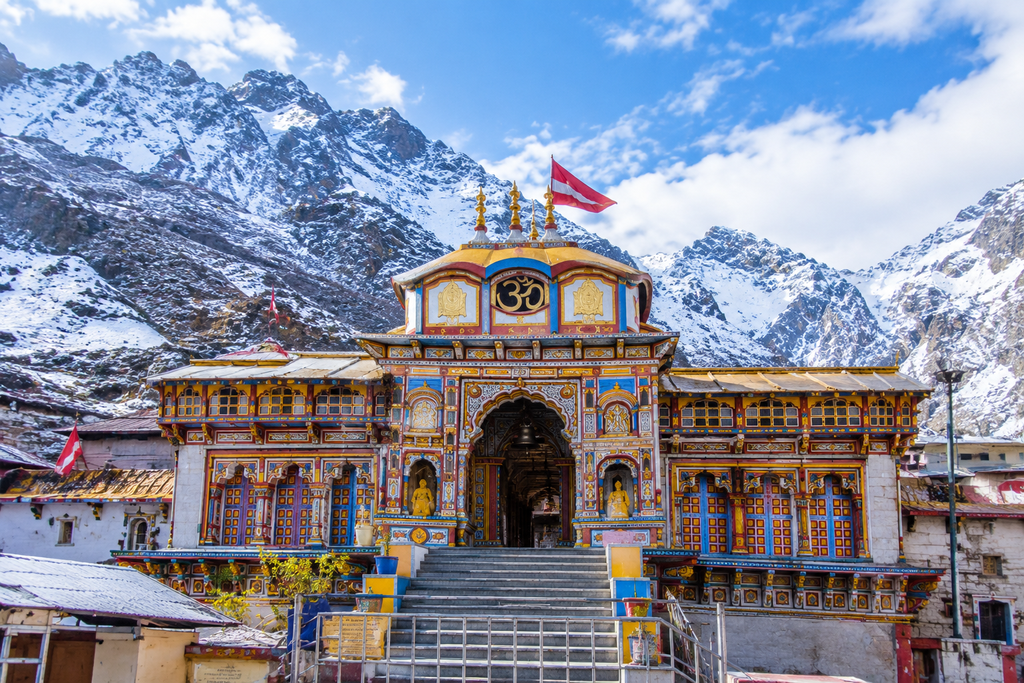
1. Badrinath Dham
Badrinath is the finicky one. It is located far inside the Garhwal Himalayas near the Alaknanda River, and the temple is closed because of snow from winter to spring every year. The opening date changes every year, and therefore it should be checked before booking any ticket.
2. Dwarka Dham
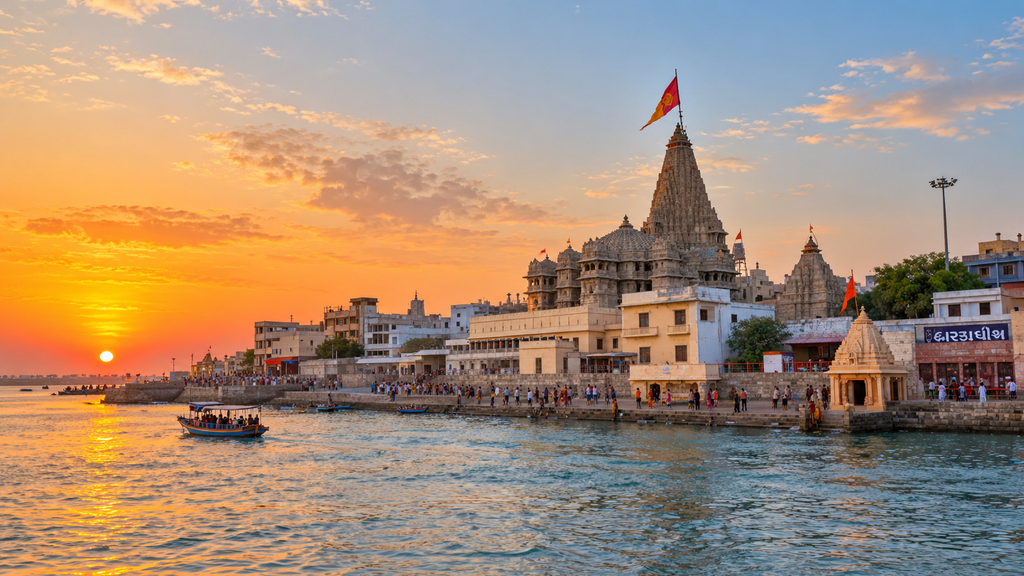
Dwarka is where Gujarat meets the Arabian Sea and has the Gomti River flowing into it. The temple of Dwarkadhish, which is that of Lord Krishna, rises in many levels and one can’t help but notice it. It’s believed by the locals as well as pilgrims that this place has a connection with the kingdom of Lord Krishna. Visit this place from October to March when the summer season passes by. The place has a railway station, or else visit Jamnagar airport and reach through roads.
3. Puri Dham
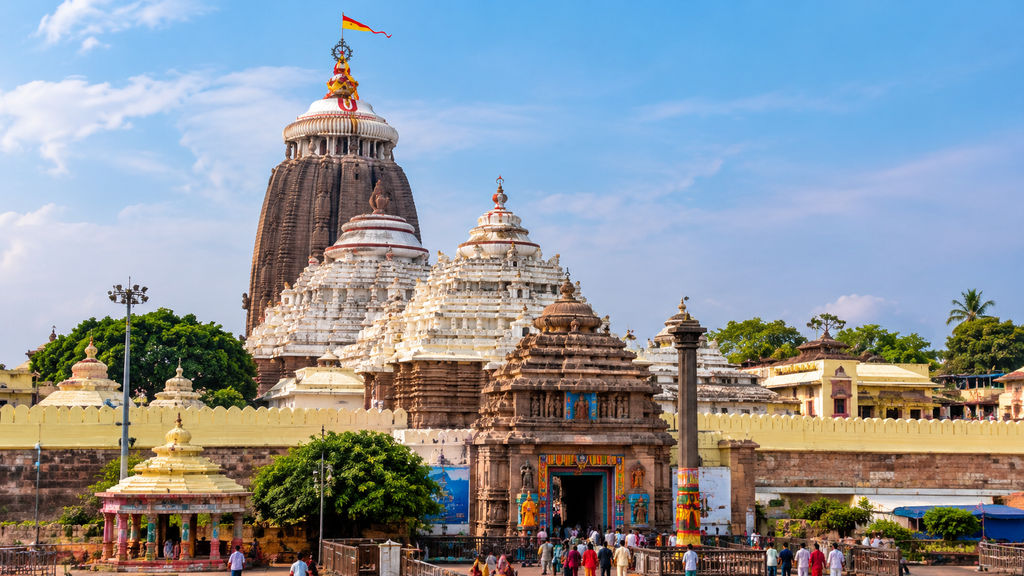
Puri is all about Lord Jagannath. The temple, set on Odisha’s Bay of Bengal coast, houses him with Balabhadra and Subhadra. Rath Yatra, when enormous chariots are hauled through the streets, usually lands in June or July. It’s an incredible sight and also a heaving crowd. If you’d rather have space, October to February is easier. The trains go right up to Puri whereas Bhubaneshwar Airport would be more convenient. Konark Sun Temple, Chilika Lake, and Puri Beach can be covered on excursions.
4. Rameswaram Dham
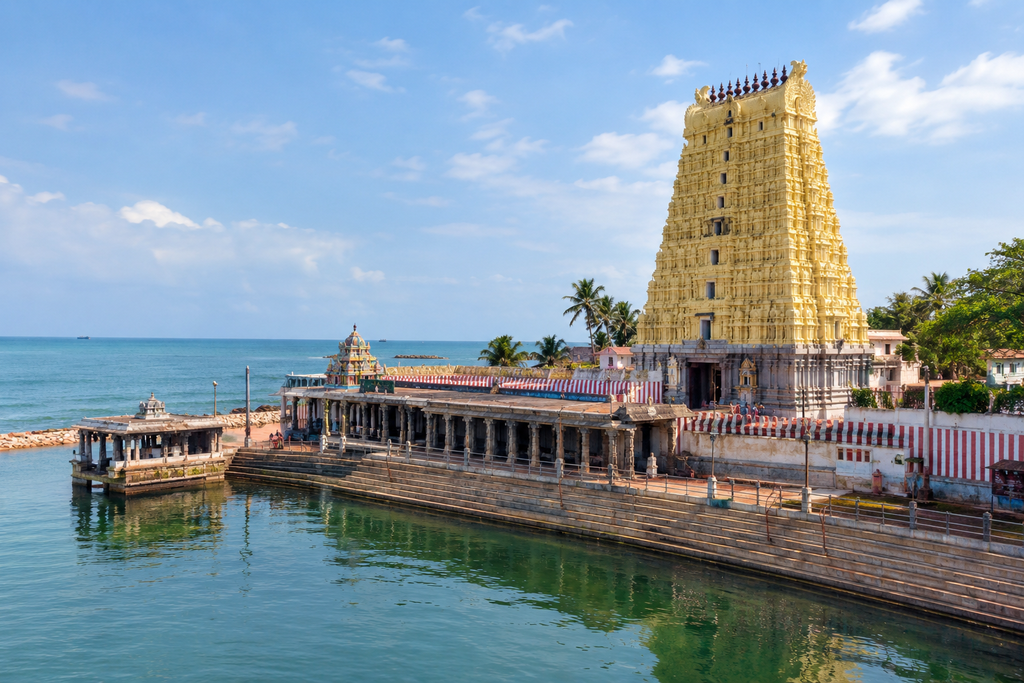
The town of Rameshwaram is located on Pamban Island, Tamil Nadu, and is connected to the mainland via the Pamban Bridge. Ramanathaswamy Temple, where the shrine of Lord Shiva exists, has the well-known corridors along with pillars and the bathing tanks. The best season to visit this place is from October to April. It has its own railway station, whereas the nearest airport is that of Madurai.
Dham in India Map
Open the 4 Dham in India map and the four dots roughly form a ring. Temple number one can be found in the north at the most northerly tip of the Himalayan chain. The second temple can be found in the west near the coast, and it is called Dwarka. The third temple can be found in the east near the Bay of Bengal.
Best Time to Visit the 4 Dham
There’s no single perfect month. Each place has its own season:
- Badrinath: Mid-year, after the snow melts.
- Dwarka: October to March.
- Puri: October to February.
- Rameswaram: October to April.
The weather factor is not all about comfort. The roads through the Himalayas are blocked due to landslides triggered by monsoon rain, while in the coastal regions, the weather turns sticky in summers. Matching the season with the four Dhama Names in India avoids some nasty surprises.
Planning a Four Dham Yatra
These sites are far apart, so anyone looking up the 4 Dham Names in India probably wants a route that works, not only names.
Time needed. Two to three weeks if you go in stages. Plenty of families split it: Badrinath in May or June, Dwarka in October or November, Puri and Rameswaram in winter.
Transport. Trains and flights for long distances, taxis and buses locally.
- Badrinath: Dehradun airport or Rishikesh station, then a long drive, often split over two days.
- Dwarka: Own station. Jamnagar airport is about 130 km away.
- Puri: Own station. Bhubaneswar airport is around 60 km away.
- Rameswaram: Own station. Madurai airport is roughly 170 km away.
Where to stay. Book early. Puri gets packed around Rath Yatra, and Badrinath fills up soon after reopening.
Temple rules. Get to know about darshan times and dress code requirements beforehand. For instance, Hinduism alone can enter the Jagannath temple of Puri.
What to carry. ID proofs, tickets, bookings, and basic medicines. Warm layers for Badrinath, even in summer. Light cotton for Dwarka and Rameswaram.
4 Dham Yatra Tips
- Book stays and transport early.
- Put on comfortable shoes because you’ll be doing a lot of walking.
- Check the weather and road conditions before you set out.
- Be familiar with the temple policies.
- Have cash and another form of payment handy.
Conclusion
Each of these 4 dhamms has its own share in the story of India’s religion and culture. Together, they include the Himalayan region, the Arabian Sea, the Bay of Bengal, and the south end of India. With this information about the 4 Dham names in India, you can prepare for your yatra, either to visit them all together or to visit them separately one by one . more information on the 4 Dham Yatra and travel planning, visit Sai Shishi Tours.
Frequently Asked Questions
Q1. What is the full list of 4 Dham Names in India?
Badrinath (Uttarakhand), Dwarka (Gujarat), Puri (Odisha), and Rameswaram (Tamil Nadu).
Q2. In which states are the 4 Dham Names in India located?
Uttarakhand, Gujarat, Odisha, and Tamil Nadu are four states in different directions in India.
Q3. What is the best season to visit the 4 Dham Names in India?
Badrinath can be visited during May-June and September-October seasons. The other three pilgrimages (Dwarka, Puri, and Rameswaram) are best visited during October-March (Puri till February and Rameswaram till April).
Q4. How many days do you require to visit 4 Dham Names in India?
Approximately two to three weeks.
Q5. Is Chota Char Dham the same as 4 Dham Names in India?
No. Chota Char Dham is an altogether different pilgrim circuit in the Himalayas of Uttarakhand.
For more travel guides, pilgrimage routes, and destination tips, visit Indian Travels for useful travel information.